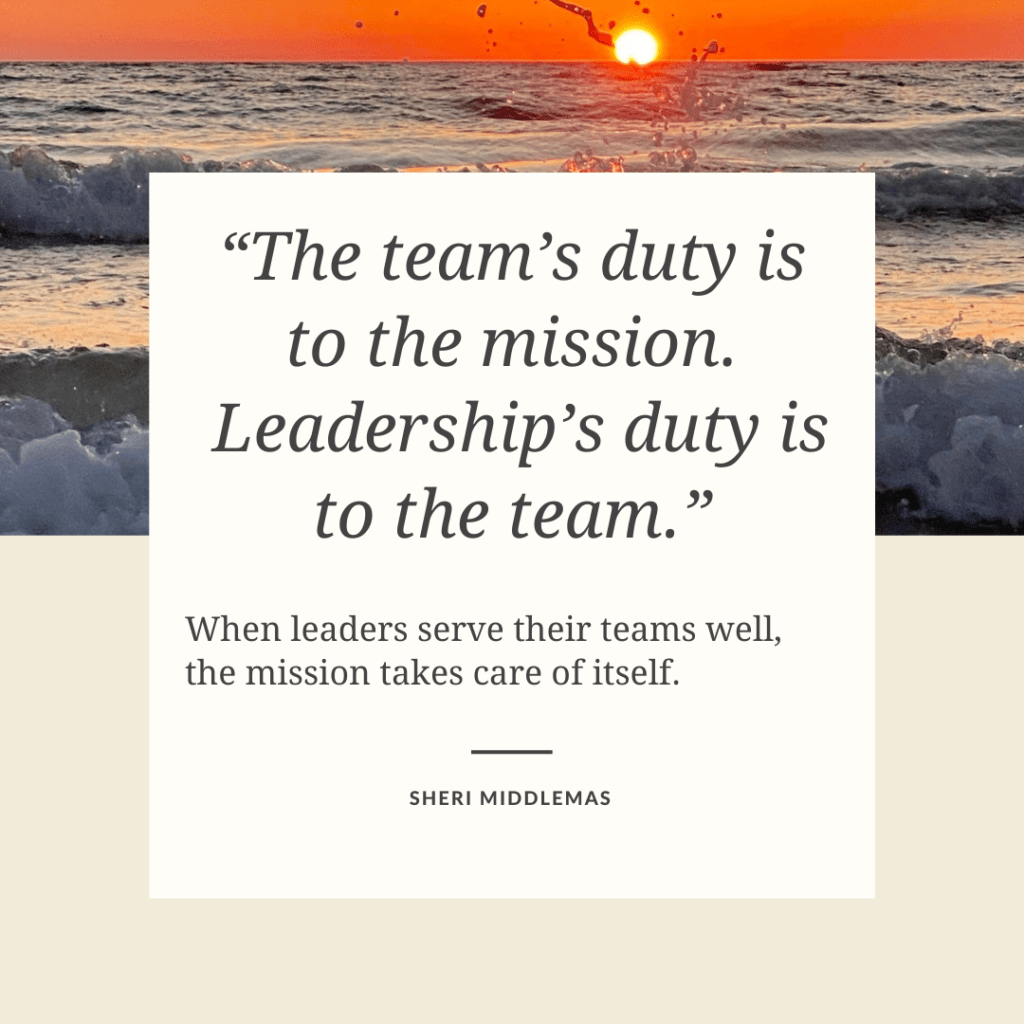
This is a simple truth we’ve seen play out time and again in successful organizations.
High-performing teams don’t happen by accident. They happen when people are clear on what needs to be done, and leaders are just as clear on their responsibility to remove obstacles, provide resources, and create an environment where the work can actually get done.
For teams, the focus is execution: meeting deadlines, serving clients, complying with regulations, and delivering results. That’s the mission. It’s the “what” and the “how”.
Leadership, however, operates one level upstream. The role of leadership isn’t to simply assign work or monitor outcomes. Leadership should ensure the team has what they need to succeed. That means clarity of direction, access to tools and information, realistic expectations, and the psychological safety to ask questions or raise concerns before small issues become big ones.
In regulated professions especially, leadership carries an added responsibility. When teams are supported, trained, and empowered, compliance improves. Risk decreases. Trust, both internally and with clients and regulators, strengthens.
Strong leaders understand that accountability flows both ways. Teams are accountable to the mission. Leaders are accountable to the people carrying it out.
When leadership shows up with consistency, transparency, and support, teams don’t just complete the mission, they take ownership of it. That is where real momentum is built.
“When leaders serve their teams well, the mission takes care of itself.”
At the end of the day, leadership isn’t about being in charge. It’s about being responsible; for the conditions, the culture, and the people who make success possible.
Call or text (512) 476-5757 or complete a Case Evaluation form